
Moors Deck
Black Wall Street
The People. The Prosperity. The Legacy.
History in Every Hand.
Discover the extraordinary people, prosperity, and enduring legacy of Black Wall Street through the Moors Card Company collectible playing card deck.
$24.99

The Historical Collection
This collection features 12 historical figures represented in our Black Wall Street playing card deck — the entrepreneurs, professionals, educators and chroniclers of Tulsa's Greenwood District.
In the early twentieth century, Greenwood grew north of the Frisco railroad tracks into one of the most celebrated Black business districts in the United States. Along Greenwood Avenue stood hotels, theaters, newspapers, groceries, doctors' and lawyers' offices, churches and schools. Not every resident was wealthy, but the district's Black-owned enterprises became famous enough that it was remembered as Black Wall Street.
On May 31 and June 1, 1921, a white mob attacked Greenwood. The 2001 Oklahoma state commission documented 1,256 homes burned and 215 more looted; the destruction is commonly described as covering about 35 blocks. Estimates of the dead range from about 100 to 300; the true number has never been established.
Greenwood's people did not disappear. They rebuilt homes, businesses and churches, fought in court for the right to do so, and preserved the memory of what had been taken. The figures in this collection — kings, queens and jacks of the deck — represent that prosperity, that loss and that resilience.
Black Wall Street
The Four Kings

King of Spades
O. W. Gurley
Land Developer & Hotelier
The Developer Who Helped Lay Greenwood's Foundations
Ottawa W. Gurley — known in the record as O. W. Gurley, with Ottowa and Ottaway also appearing — was born on December 25, 1868, in Huntsville, Alabama, to John and Rosanna Gurley, according to the Encyclopedia of Arkansas. His family moved to Arkansas around 1876, and the 1880 census places them in Vaugine Township, Jefferson County.
Read Full Biography →
King of Diamonds
A. J. Smitherman
Publisher, The Tulsa Star
The Pen Warrior of Greenwood
Andrew Jackson Smitherman, known as A. J. Smitherman, was born in 1883 in Alabama. By April 1913 he had established the Tulsa Star in Greenwood, arriving with very little cash and obtaining his printing equipment on credit, according to Barbara Seals Nevergold's study of his life in The Chronicles of Oklahoma. J. B. Stradford befriended the young publisher and provided a short-term loan that helped the paper get established.
Read Full Biography →
King of Hearts
J. B. Stradford
Attorney & Hotel Proprietor
The Hotelier Who Refused to Accept Segregation
John the Baptist Stradford — J. B. Stradford — was born in Versailles, Kentucky, in 1861; his father was Julius Caesar Stradford. He studied at Oberlin College in Ohio, where, according to his descendant Tucker C. Toole, he met his first wife, Bertie Wiley. The couple returned to Kentucky, where Stradford worked as a school principal and owned a barbershop.
Read Full Biography →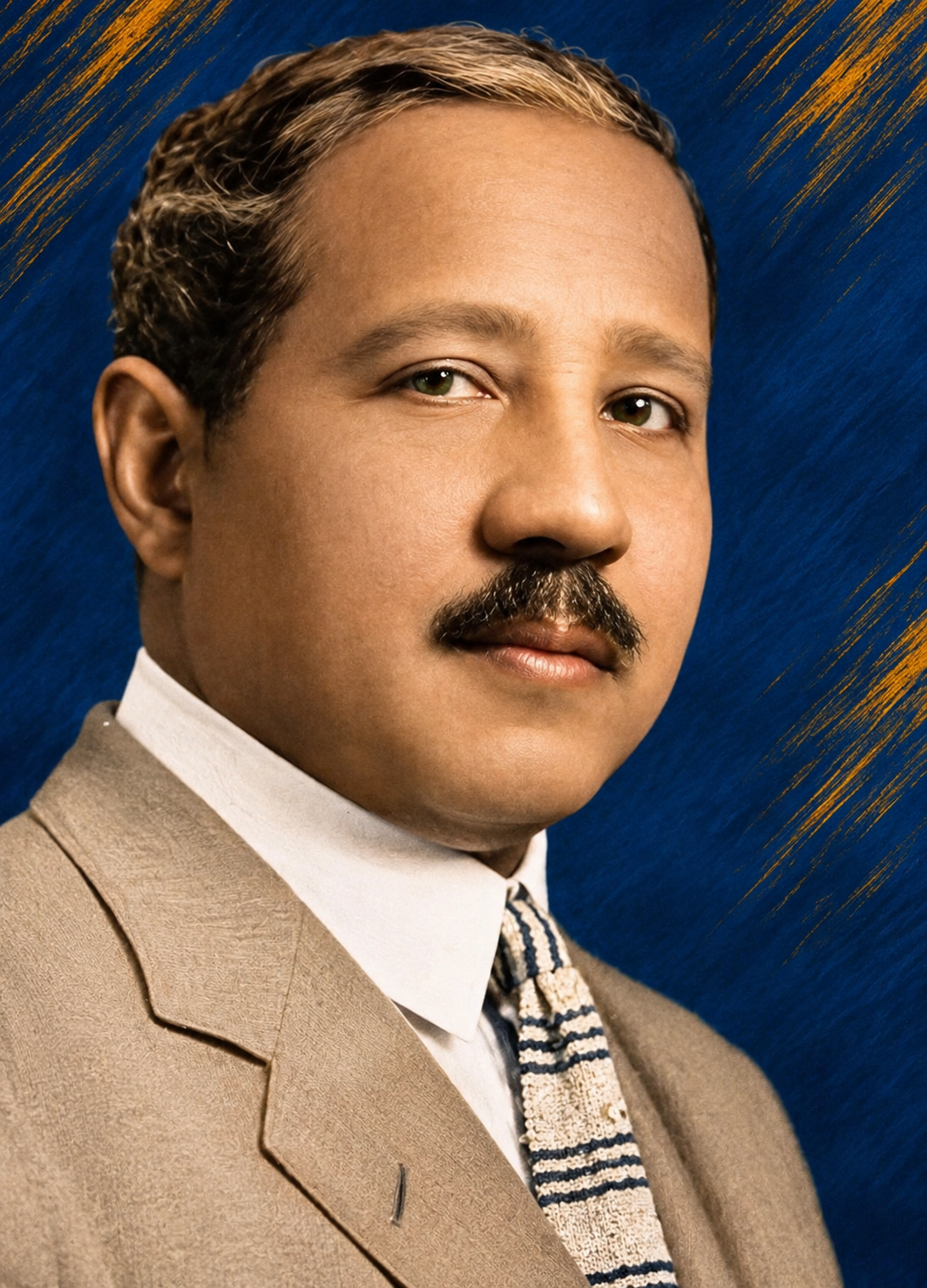
King of Clubs
T. J. Elliott
Clothing Merchant
The Merchant Who Built a Store From a Suitcase
T. J. Elliott was a Black clothing merchant in Muskogee, Oklahoma, documented in Oklahoma newspaper history. A 1977 retrospective in the Oklahoma Eagle recalls that around 1900 he began selling clothing from a suitcase. Around 1903 he married a woman born and raised near Wagoner, Oklahoma — the article does not give her name — and in 1904 the couple opened the T. J. Elliott Store on South Second Street in Muskogee.
Read Full Biography →Black Wall Street
The Four Queens

Queen of Hearts
Laura Stradford
Identity Not Established
Named on the Black Wall Street card roster — historical identity not established
The Moors Card Company roster for the Black Wall Street deck names this figure as Laura Stradford and describes her as the wife of hotelier and attorney J. B. Stradford. The sources reviewed for this page do not confirm either point: none identifies a wife of J. B. Stradford named Laura, and none places a woman named Laura Stradford in Greenwood in 1921.
Read Full Biography →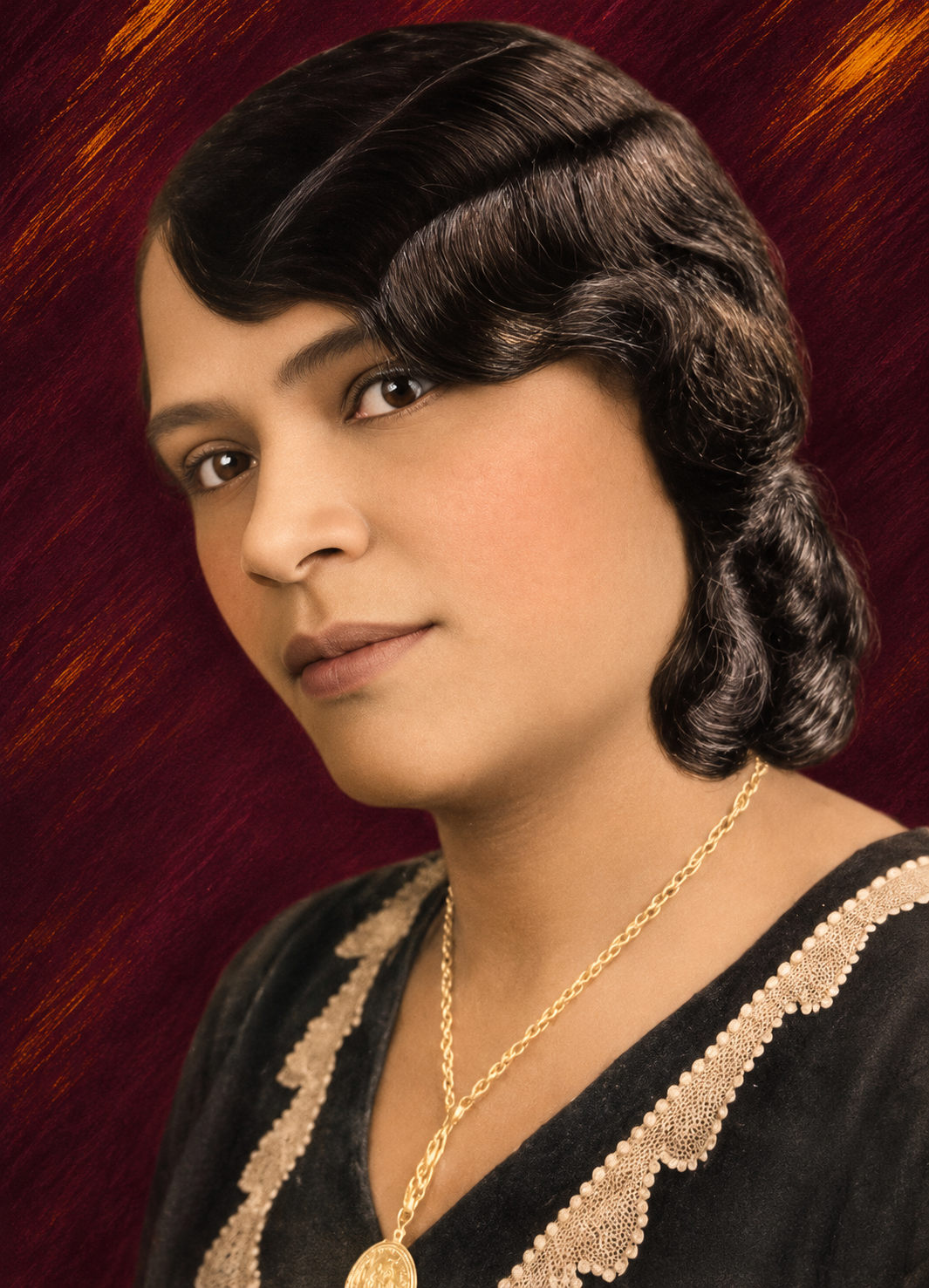
Queen of Clubs
Mary Elliott
Identity Not Established
Named on the Black Wall Street card roster — historical identity not established
The Moors Card Company roster for the Black Wall Street deck names this figure as Mary Elliott and describes her as the wife of merchant T. J. Elliott. The sources reviewed for this page do not confirm either point: none identifies a woman named Mary Elliott in Greenwood in 1921, and none gives the first name of T. J. Elliott's wife as Mary.
Read Full Biography →
Queen of Spades
Loula Williams
Proprietor, Dreamland Theatre
The Entrepreneur Behind Greenwood's Dreamland
Loula T. Williams — recorded as Loula Thomas Cotten Williams, with the spellings Lulu, Lola and Cotton also appearing — was born in Tennessee to Thomas and Sallie Cotten, according to the Women of Black Wall Street research project. She was educated at Lane College in Jackson, Tennessee, and became a teacher.
Read Full Biography →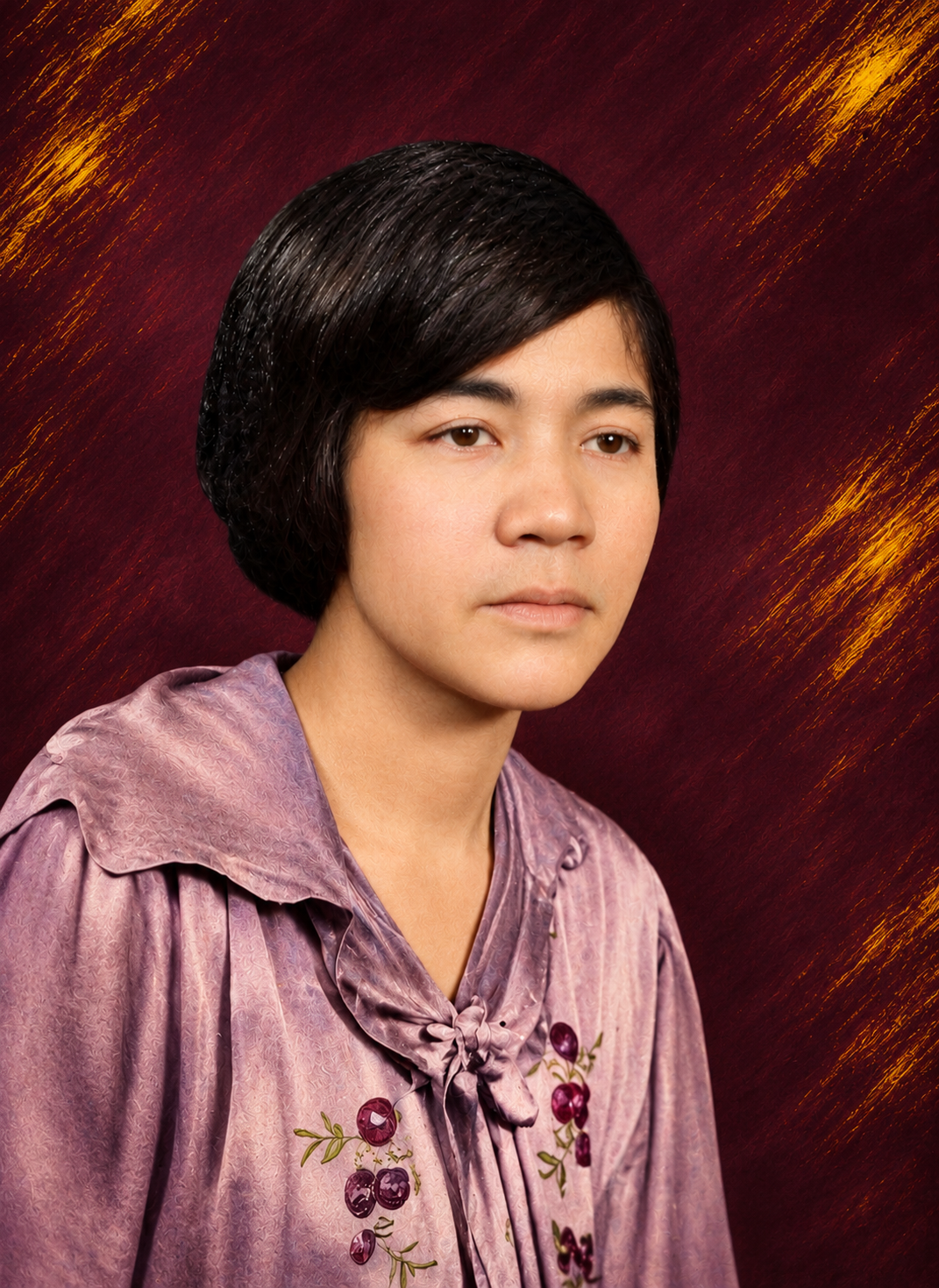
Queen of Diamonds
Mary E. Jones Parrish
Educator, Journalist & Massacre Chronicler
The Witness Who Made Sure Greenwood Would Be Remembered
Mary Elizabeth Jones Parrish was born in Mississippi; Trinity University Press gives her birth as 1892 in Yazoo City, though other records suggest 1890 or 1895. She married Simon Parrish of Quincy, Illinois, and their daughter, Florence Mary, would be with her during the most dangerous hours of her life. She studied shorthand at the Rochester Business Institute in New York.
Read Full Biography →Black Wall Street
The Four Jacks
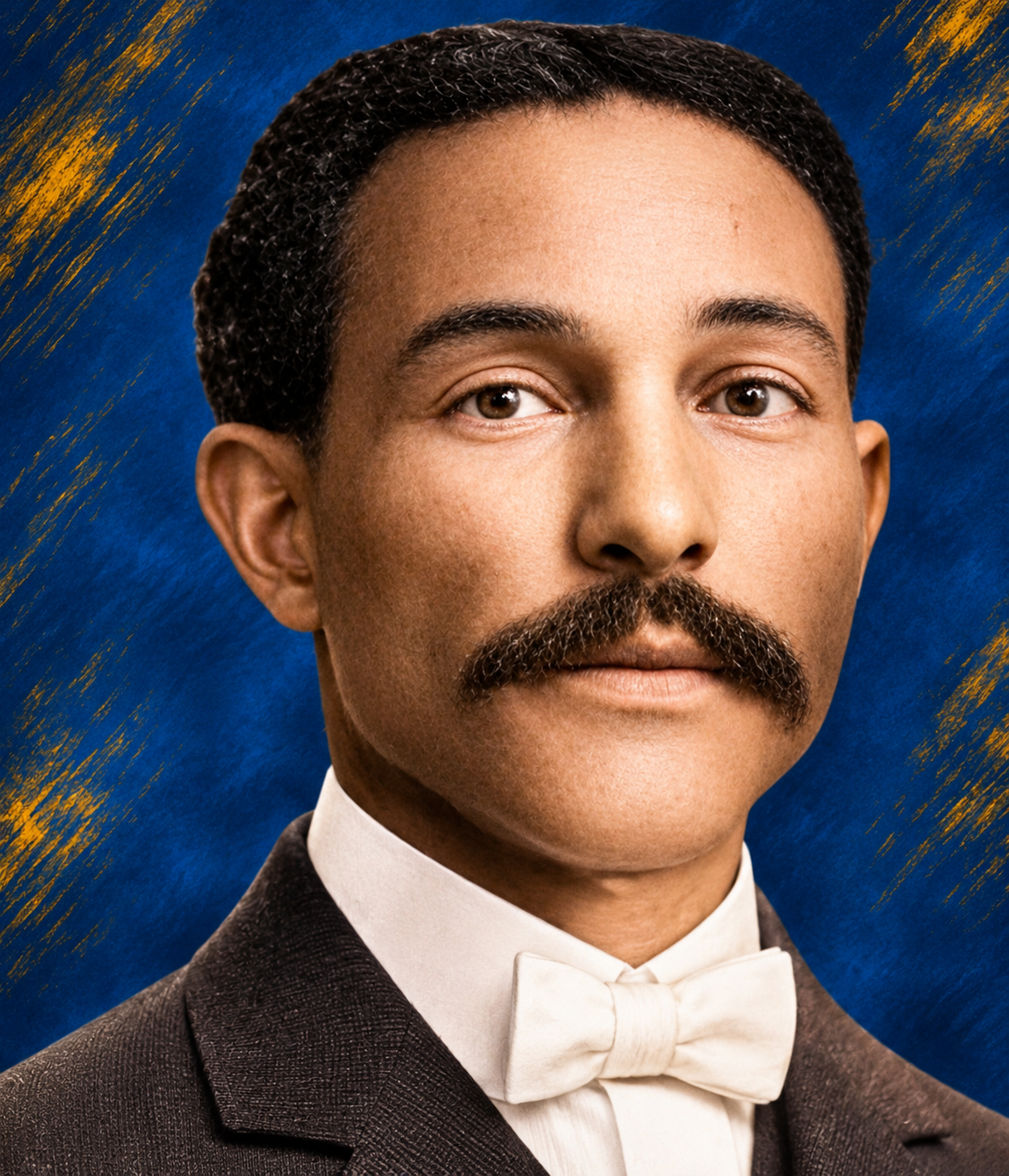
Jack of Spades
Dr. A. C. Jackson
Physician & Surgeon
The Surgeon Greenwood Lost
Andrew C. Jackson — Dr. A. C. Jackson, recorded by his family as Andrew Chesteen Jackson — was born in Memphis, Tennessee, in February 1879 to Townsend D. and Sophronia Jackson, according to researcher Carlos Moreno. The family settled in Guthrie, Oklahoma Territory, around 1889. Jackson trained as a physician at Meharry Medical College in Nashville, one of the principal medical schools for Black physicians of his era.
Read Full Biography →
Jack of Hearts
Buck Colbert Franklin
Attorney & Defender of Greenwood
The Lawyer Who Fought for the Right to Rebuild
Buck Colbert Franklin — B. C. Franklin — was born on May 6, 1879, in Homer, in the Chickasaw Nation of Indian Territory, to David and Millie Franklin. He attended Dawes Academy and Roger Williams University in Nashville, where he met Mollie Parker and the educator John Hope. He followed Hope to Atlanta Baptist College, graduating in 1903 according to the Tulsa Historical Society.
Read Full Biography →
Jack of Diamonds
Simon Berry
Transportation Entrepreneur
The Entrepreneur Who Kept Greenwood Moving
Simon Berry was born in Mississippi on July 6, 1890, according to researcher Carlos Moreno. Before his Tulsa career he taught automobile mechanics at West Tennessee College — training that would shape everything he built. Newspaper and other records place him in Tulsa by 1915.
Read Full Biography →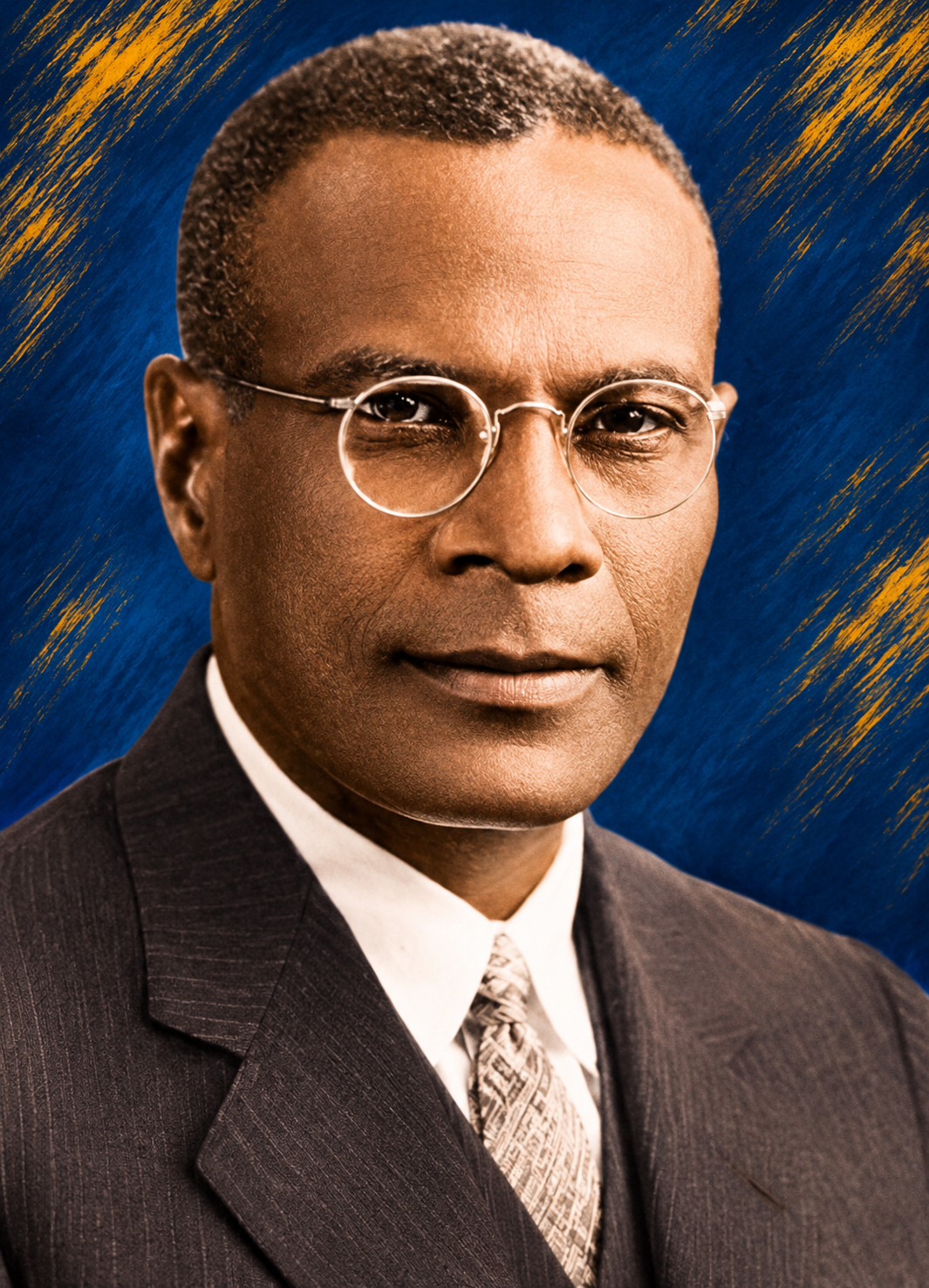
Jack of Clubs
Ellis Walker Woods
Principal, Booker T. Washington High School
The Educator Who Built a School Into a Legacy
Ellis Walker Woods was born in 1885 in eastern Mississippi to formerly enslaved parents. He farmed as a young man and worked his way through secondary school and college at Rust College in Holly Springs, Mississippi.
Read Full Biography →The Legacy of Black Wall Street
Greenwood was built by people who turned land, skill and determination into a thriving community in the face of segregation. Its newspapers spoke for its residents, its hotels and theaters welcomed them, its doctors cared for them and its schools prepared their children for the future.
The massacre of 1921 destroyed much of what they built, but not the memory of it. Through survivors' testimony, family histories, legal battles and the work of historians, the story of Black Wall Street has been carried forward. The Black Wall Street collection by Moors Card Company honors the people at the center of that story.
Twelve historical figures. Four kings. Four queens. Four jacks. One enduring legacy.
Moors Card Company — History in Every Hand.