
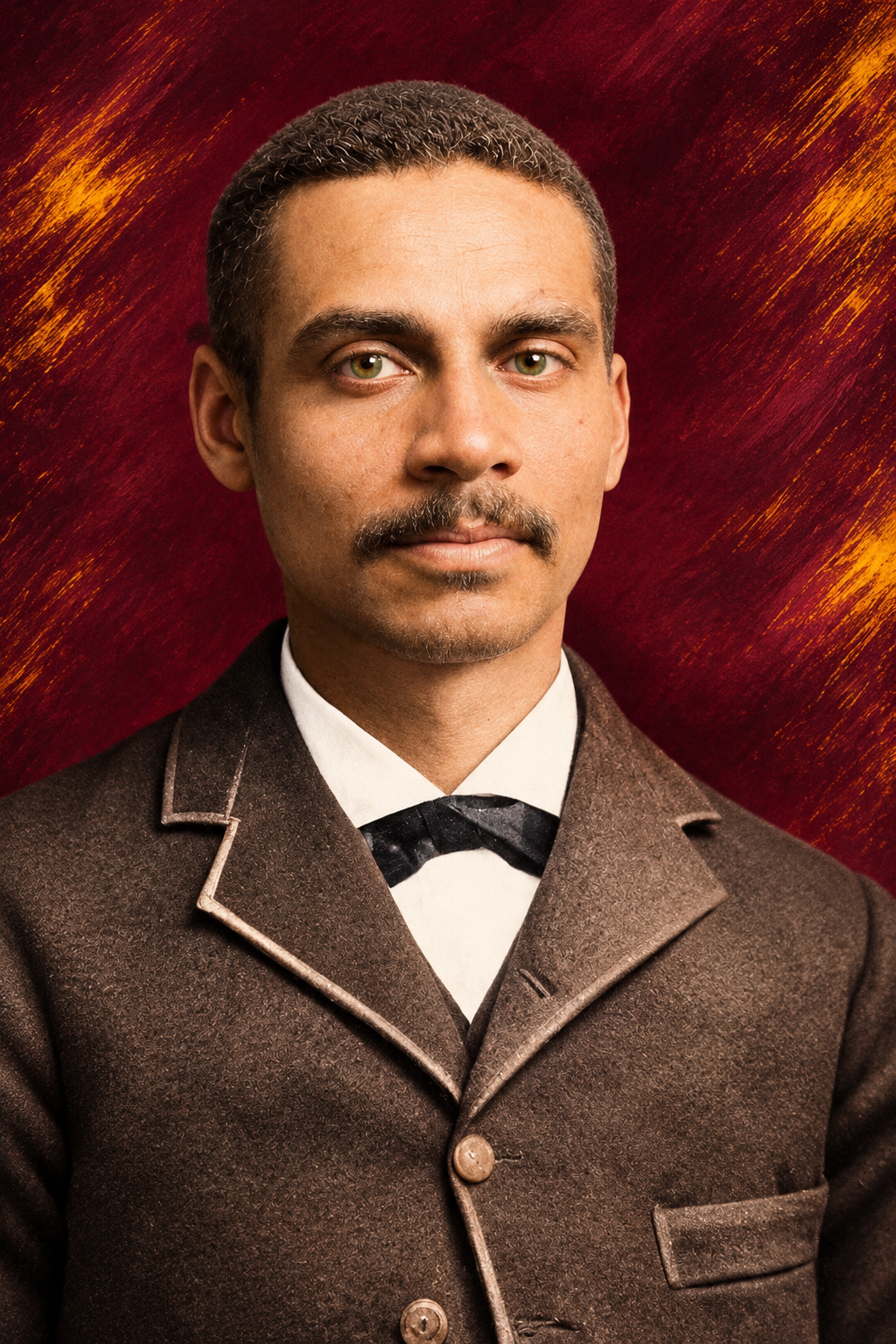

Biography
Early Life
John the Baptist Stradford — J. B. Stradford — was born in Versailles, Kentucky, in 1861; his father was Julius Caesar Stradford. He studied at Oberlin College in Ohio, where, according to his descendant Tucker C. Toole, he met his first wife, Bertie Wiley. The couple returned to Kentucky, where Stradford worked as a school principal and owned a barbershop.
After witnessing a lynching, Stradford left Kentucky with Bertie for Indiana, where he ran a bicycle business and a barbershop. He earned a law degree in 1899. The couple later lived in Coffeyville, Kansas, where Bertie died.
Building in Greenwood
Stradford settled in Tulsa — on March 9, 1905, according to his descendant's memoir-based account, though other sources give an earlier date. He invested in real estate and practiced law, and by December 1908 he was married to Augusta Stradford. That month the couple were arrested after refusing segregated railroad accommodations, an early sign of the stance that defined his public life.
Contributions to Greenwood
In August 1916 Stradford led opposition to Tulsa's residential segregation ordinance at a meeting held in the Dreamland Theatre. On June 1, 1918, he opened the Stradford Hotel at 301 North Greenwood, a large modern hotel that became one of the district's landmarks and a symbol of what Black capital and ambition could build. He also helped A. J. Smitherman establish the Tulsa Star with a short-term loan.
The 1921 Massacre
Three years to the day after it opened, the Stradford Hotel was burned during the massacre. J. B. and Augusta Stradford were interned during the attack. Stradford escaped detention but was arrested in Kansas on charges of inciting the riot; with help from his son Cornelius, an attorney, he reached Chicago and avoided being returned to Oklahoma.
Later Life and Exoneration
Stradford never recovered his former fortune. He practiced law in Chicago and died there at the age of 74. In 1996, at a ceremony in Tulsa attended by his descendants, he was formally cleared of the charges brought against him after the massacre.
What the Record Shows
Sources disagree on Stradford's arrival date in Tulsa (1899 or 1905), on the details of his education, and on the hotel's room count (54 or 55). Claims that he and his wife were Oberlin's first Black students are not supported and are not repeated here, nor is the claim that his hotel was the largest Black-owned hotel in the country.
Historical Legacy
The Stradford Hotel stood as one of Greenwood's landmarks — proof of the scale of enterprise Black Tulsans built in the face of segregation.
Stradford's public fight against segregated travel and Tulsa's residential segregation ordinance places him among Greenwood's civil-rights leaders.
His 1996 exoneration, sought by his descendants, corrected part of the official record of 1921.
Sources & Historical References
- Tucker C. Toole, "Thousands lost everything in the Tulsa Race Massacre, including my family," National Geographic ↗
- Carlos Moreno, The Victory of Greenwood: J. B. Stradford ↗
- Oklahoma Commission to Study the Tulsa Race Riot of 1921, Final Report (2001) ↗
- PBS American Experience, A Walk Along Black Wall Street (2021) ↗