
Stories · August 11, 2026
1520 Sedgwick Avenue: The Address That Changed the World
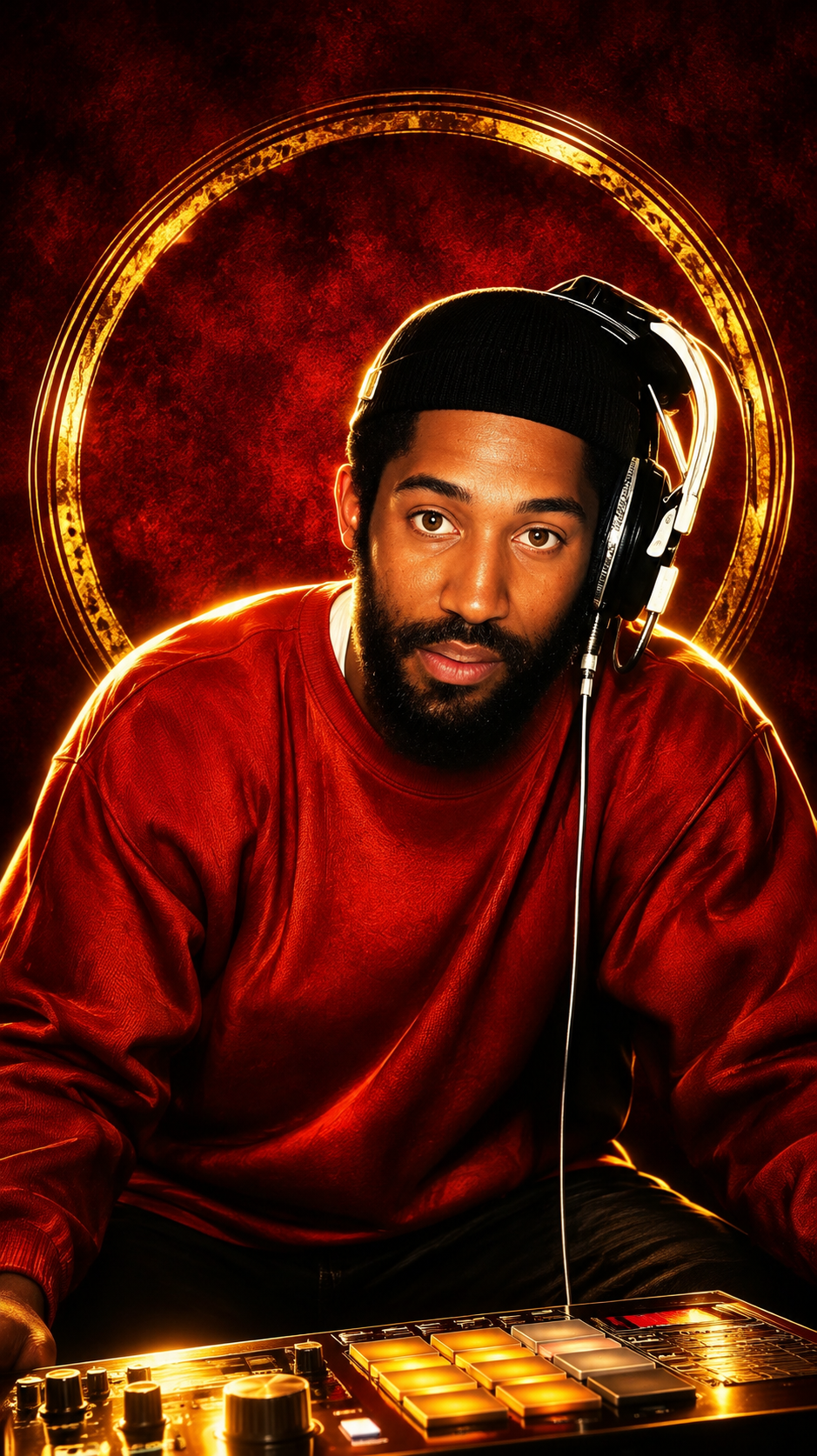
The rec room where it all began.
By Moors Media
Before the World Was Listening
From the street, 1520 Sedgwick Avenue does not look like a monument. It is an 18-story brick apartment building in the Morris Heights section of the West Bronx, completed in the late 1960s as affordable housing for working families, set beside the Major Deegan Expressway just north of the Cross Bronx. More than half a century ago, a party in its ground-floor recreation room became the moment the world would later point to as the birth of Hip-Hop.
To understand why that night mattered, it helps to understand the Bronx around it. In the decades after World War II, the Cross Bronx Expressway — championed by planner Robert Moses and completed in 1972 — cut through established neighborhoods, displacing residents and businesses. Many landlords disinvested; fires and abandonment hollowed out blocks, especially in the South Bronx; city services thinned as New York slid toward its mid-1970s fiscal crisis. According to the U.S. Census, the Bronx lost roughly 300,000 residents between 1970 and 1980, falling from about 1.47 million people to about 1.17 million.
Street gangs claimed much of that terrain. In December 1971, after Cornell "Black Benjie" Benjamin of the Ghetto Brothers was killed while trying to make peace between rival groups, dozens of gangs met at the Hoe Avenue Boys Club and negotiated a truce. It did not end the violence, but historians and journalists have connected the period that followed to the parties, park jams and dance battles that began to give young people another way to compete and belong.
What the headlines of the era rarely captured was the creativity. Black and Latino teenagers — African American, Puerto Rican, Jamaican, Barbadian and more — were building their own entertainment out of what they had: record collections, borrowed speakers, community rooms, schoolyards and their own imaginations. Many were too young for the nightclubs downtown. They needed somewhere to dance, and someone to play the records.
August 11, 1973: The Party That Made History
That someone lived at 1520 Sedgwick Avenue. Clive Campbell, who had moved to the Bronx from Kingston, Jamaica, with his family as a boy, was 18 years old and already known to friends as Kool Herc. His younger sister, Cindy Campbell, was a high school student with a plan: she wanted new clothes for the school year, and she decided to raise the money by throwing a party in the building's recreation room.
Cindy handled the business. She rented the room, wrote invitations by hand on index cards and set the admission: 25 cents for "ladies" and 50 cents for "fellas," a detail confirmed in Smithsonian, BBC and GRAMMY.com accounts of the night. She asked her brother to provide the music, and detailed histories of the evening, including one published by Wax Poetics, describe the whole family pitching in, from snacks to drinks to speakers.
“"I wrote out the invites on index cards, so all Herc had to do was show up." — Cindy Campbell, recalling the party to Wax Poetics”
Herc brought turntables and a powerful sound system and played the funk and soul records the crowd loved. His friend Coke La Rock picked up the microphone, calling out friends' names and dropping short rhymes over the music to hype the room. The space held only a few hundred people. Smithsonian magazine reports that the siblings took in about $300 by the night's end — enough for Cindy's wardrobe, and the start of something no one there could have predicted.
Historical accuracy matters here. August 11, 1973, is widely recognized as Hip-Hop's symbolic birthday — the date honored by the U.S. Senate, celebrated at the 50th anniversary and taught in museums. It is not the night every element of the culture was invented. DJs, MCs, dancers and graffiti writers across New York were developing their crafts in the same years; and earlier artists, from the Last Poets to DJ Hollywood, had already put rhythm and spoken word together. Retellings also differ on small details: some describe the event as a birthday celebration, and at least one account gives a slightly different date. What the sources agree on is the essentials — the address, the organizer, the DJ and the moment that came to stand for a culture's beginning.
Cindy Campbell: The Woman Behind the Invitation
For years, the story of 1520 Sedgwick Avenue was told almost entirely through Kool Herc. His innovations deserve that attention. But without Cindy Campbell there would have been no party at all. She saw a need, organized the event, secured the room, designed and handed out the invitations, set the prices and managed the money. In today's language, she was the promoter — and the business model she used, a modest door charge at a community party, became the model for many of the jams that followed.
In recent decades she has received broader recognition and has told her own story in interviews, including with GRAMMY.com for the 50th anniversary. Smithsonian magazine has described her as the "First Lady and Mother of Hip-Hop," and when Sedgwick Avenue was co-named Hip Hop Boulevard in 2016, Bronx Council Member Vanessa Gibson hailed her as "the first lady of hip hop." The U.S. Senate's 2023 resolution marking Hip-Hop's 50th anniversary specifically names the "Back To School Jam" as "an event organized by his sister, Cindy Campbell."
Her place at the very start of the story is part of a longer pattern. Women were present and essential in Hip-Hop from the first night — as organizers, MCs, DJs, dancers, writers and executives — even when histories left them in the margins. Moors Media explores that history in depth in The Women Who Built Hip-Hop.
DJ Kool Herc and the Breakbeat Revolution
Herc's own life story is told on his Moors artist profile. This feature focuses on what he did with the records — and why it mattered so much to the people on the dance floor.
Herc noticed that dancers waited for one particular part of a song: the break, the stretch where the vocals drop out and the drums and percussion take over. On most records it lasted only a few seconds. Using two turntables and two copies of the same record, he began playing the break on one, then cueing it up on the other, switching back and forth to extend those few seconds into minutes. He called the approach the Merry-Go-Round. The Smithsonian's National Museum of African American History and Culture describes how it gave dancers longer stretches to show the moves they had saved for the break.
“"When I extended the break, people were ecstatic, because that was the best part of the record to dance to." — DJ Kool Herc, quoted in The Guardian”
His approach also carried the influence of Jamaica. In Kingston, outdoor sound systems — mobile rigs of turntables and towering speakers run by crews with devoted followings — were a center of neighborhood life, and selectors and deejays talked to the crowd over the music. Herc's loud, bass-heavy setup and the shout-outs on his microphone were often compared to that tradition. Writers have long cited Jamaican "toasting" as an ancestor of the MC, while cautioning that early Bronx rhyming grew out of many sources at once, including African American radio DJs, street rhymes and church and spoken-word traditions.
Above all, the music was built for dancing. The young people who rushed the floor when the break came became known as break boys and break girls — b-boys and b-girls — and the dance itself as breaking. Herc's job was to read the room and keep them moving, and the records he chose, from hard funk to obscure finds, set a standard for crate-digging that DJs still follow.
From the Recreation Room to the Streets
Herc's parties grew quickly. As the crowds outgrew the recreation room, he began playing outdoors in nearby parks, including Cedar Park, as well as at local clubs and community spaces; Coke La Rock later recalled in rhyme how the crew moved from a spot called the Twilight Zone to the Executive Playhouse and out into the park. Other DJs did the same across the borough, sometimes powering their systems by tapping into streetlights, and park jams and block parties became the places where a new culture took shape in public.
Over the rest of the 1970s, the elements now associated with Hip-Hop developed side by side. DJs competed over sound systems and rare breaks. MCs moved from shout-outs to written rhymes and routines, and crews formed around them. Dancers built breaking into a competitive art, with groups such as the Rock Steady Crew, founded in the Bronx in 1977, carrying it forward. And graffiti writing — already spreading across subway cars citywide, as a 1971 New York Times profile of the Manhattan writer TAKI 183 documented — became the culture's visual language.
None of this happened in one place or because of one person. Puerto Rican and other Latino youth were central to breaking, DJing and graffiti from the start; women such as Sha-Rock of the Funky 4 + 1, who performed on Saturday Night Live in 1981, proved that the microphone belonged to everyone. What 1520 Sedgwick Avenue represents is not a single invention, but the spark that helped connect them.
The Pioneers Who Built the Movement
The August 11 party is a symbolic beginning. Most of the people below did not perform there, and their greatest contributions came in the months and years after. Together, they turned a style of party into a culture.
Coke La Rock. Herc's friend and partner, born in the Bronx in 1955, is the one pioneer in this list documented at the August 11 party itself, where he worked the microphone. He is widely credited as one of Hip-Hop's very first MCs, though he rarely recorded and much of his early work survives only in memory.
Grandmaster Flash. Joseph Saddler, whose family roots are in Barbados, took Herc's idea and pursued precision. Through what he called the Quick Mix Theory, he worked out how to cut cleanly between turntables on the beat, building on techniques developed with others in his circle, including Grand Wizzard Theodore, who is widely credited with inventing the scratch. With the Furious Five, Flash's name became attached to "The Message" (1982) — a record written and performed chiefly by Duke Bootee and Melle Mel — which the Library of Congress added to the National Recording Registry in 2002.
Afrika Bambaataa. A Bronx River Houses DJ and former member of the Black Spades gang, Bambaataa founded the organization that became the Universal Zulu Nation, which promoted Hip-Hop as a culture of peace, unity and creativity, and recorded the electro landmark "Planet Rock" (1982) with the Soulsonic Force. His legacy is complex: in his later years he faced multiple, widespread accusations of child sexual abuse, which he denied. He died in April 2026 at age 68. An honest history records both his influence on the culture's early identity and those serious allegations.
Grandmaster Caz. Born in 1960, Caz first encountered the new music, by his own account, as a 13-year-old at a Kool Herc party in 1973. He soon formed one of the earliest DJ crews, the Mighty Force, with DJ Disco Wiz — widely recognized as one of the first Latino Hip-Hop DJs — and later became a celebrated lyricist with the Cold Crush Brothers. Caz is generally acknowledged as the uncredited writer of many of Big Bank Hank's lines on the Sugarhill Gang's 1979 hit "Rapper's Delight," the first Hip-Hop single to break into the Billboard Top 40.
“"We were trying to be entertainers and we were trying to escape the streets. Hip Hop was our alternative to the streets." — Grandmaster Caz, interviewed by The Hip Hop Museum”
Many others belong in this story: DJ Kool Herc's dancers and MCs, the Herculoids; Grand Wizzard Theodore; Kool DJ AJ; Melle Mel and the Furious Five; DJ Disco Wiz; Sha-Rock; the Cold Crush and Funky 4 + 1 crews; and the countless dancers and writers whose names were never written down. Oral history is a crucial source for this era, and where memories differ, Moors Media presents those accounts as recollections rather than settled fact.
The Address That Became a Landmark
For decades, 1520 Sedgwick Avenue remained what it had always been: home to families. Its significance as a historic site came into focus because of a fight to keep it that way. The building had been part of New York's Mitchell-Lama program, which kept rents affordable for moderate-income households. In 2007, its owners moved to leave the program, a step that tenants feared would push rents to market rate and force longtime residents out.
Tenants, housing advocates, elected officials and Hip-Hop pioneers — Kool Herc prominent among them — organized to save it. On July 5, 2007, the New York State Office of Parks, Recreation and Historic Preservation determined that 1520 Sedgwick Avenue was eligible for listing on the State and National Registers of Historic Places, an unusual step for a building less than 50 years old that required a finding of exceptional importance. Advocates described it at the time as the first site recognized in this way because of its connection to Hip-Hop. Eligibility is not the same as formal listing, but it gave the building's history official standing.
“"This is where it came from. This is it. The culture started here and went around the world." — Clive Campbell (DJ Kool Herc), outside the building, to The New York Times in 2007”
The recognition did not stop the sale. In 2008 the building was bought by investors, and as the housing market collapsed, tenants reported years of broken elevators, leaks and missing heat. In 2011, with the support of tenants, the city's Department of Housing Preservation and Development and the Urban Homesteading Assistance Board, Workforce Housing Group took ownership and committed to long-term affordability. A $16.8 million renovation was completed in 2013, and Herc joined residents to celebrate.
In February 2016, New York City co-named the stretch of Sedgwick Avenue from Depot Place to the building "Hip Hop Boulevard," with Kool Herc in attendance when Mayor Bill de Blasio signed the law. Visitors and tour groups still come to stand outside. It is worth remembering that 1520 Sedgwick Avenue is not a museum; it is a residential building, and its residents are part of its living history.
From One Bronx Address to the World
From the Bronx, Hip-Hop spread to every borough, every American region and, within a generation, every continent — each place adding its own language, sounds and styles while keeping the core elements recognizable. Breaking made its Olympic debut at the Paris 2024 Games. Hip-Hop became one of the most popular forms of music on earth and one of the defining cultural forces of the past half-century.
In 2023, the world marked 50 years since the Back to School Jam. On July 20 of that year, the U.S. Senate passed a resolution by unanimous consent designating August 11, 2023, as "Hip Hop Celebration Day." On August 11, Hip Hop 50 Live filled Yankee Stadium in the Bronx with performers from across five decades, and institutions from the Smithsonian to NPR and PBS revisited the story of that recreation room. In the Bronx, The Hip Hop Museum is under construction on the Harlem River waterfront, with its opening currently projected for 2027.
“"On August 11, 1973, Clive 'DJ Kool Herc' Campbell introduced his innovative style of disc jockeying at an event organized by his sister, Cindy Campbell, called the 'Back To School Jam,' which was held in the recreation room of 1520 Sedgwick Avenue in the Bronx, New York." — U.S. Senate Resolution 305 (2023)”
For Moors Card Company, this story captures why culture is worth collecting. A world-changing movement began with a teenager raising money for school clothes, a brother with a sound system, a friend with a microphone and a room full of young people from immigrant and working-class families. Preserving that history — with its organizers and innovators, its documented facts and its living memories — is how its legacy is honored.
The address is ordinary. What happened there was not. From one Bronx recreation room, a culture reached the world, and it still carries the names of the people who built it.
Sources and Further Reading
1. Smithsonian Magazine, "How Hip-Hop Was Born 50 Years Ago at a Block Party in the Bronx" (2022, updated 2023) — https://www.smithsonianmag.com/smithsonian-institution/how-the-block-party-became-an-urban-phenomenon-180980560/
2. Smithsonian National Museum of African American History and Culture, "Hip-Hop (R)Evolutions" — https://nmaahc.si.edu/explore/initiatives/hip-hop-revolutions
3. NPR, All Things Considered, "50 years ago, teenagers partied in the Bronx — and gave rise to hip-hop" (July 2023) — https://www.npr.org/2023/07/11/1186407223/50-years-ago-teenagers-partied-in-the-bronx-and-gave-rise-to-hip-hop
4. NPR, "Hip-hop at 50: A history of explosive musical and cultural innovation" (August 2023) — https://www.npr.org/2023/08/11/1193243028/hip-hop-at-50-a-history-of-explosive-musical-and-cultural-innovation
5. PBS, History Detectives, "Birthplace of Hip Hop" — https://www.pbs.org/opb/historydetectives/investigation/birthplace-of-hip-hop/
6. PBS NewsHour, "Nelson George on the 50-year evolution and legacy of hip-hop" (August 2023) — https://www.pbs.org/video/hip-hop-at-50-1691782316/
7. U.S. Senate, S.Res.305, 118th Congress (2023), commemorating the 50th anniversary of hip hop — https://www.congress.gov/bill/118th-congress/senate-resolution/305
8. GRAMMY.com, "Founding Father DJ Kool Herc & First Lady Cindy Campbell Celebrate Hip-Hop's 50th Anniversary" (July 2023) — https://www.grammy.com/news/dj-kool-herc-cindy-campbell-50th-anniversary-of-hip-hop-interview-jamaican-roots/
9. BBC Culture, "Hip-hop 50: The party that started hip-hop" (August 2023) — https://www.bbc.com/culture/article/20130809-the-party-where-hip-hop-was-born
10. Wax Poetics, "Coke La Rock" by Michael A. Gonzales (Issue 51; online 2020) — https://magazine.waxpoetics.com/article/coke-la-rock/
11. The Guardian, "DJ Kool Herc DJs his first block party" (2011) — https://www.theguardian.com/music/2011/jun/13/dj-kool-herc-block-party
12. The New York Times, "Will Gentrification Spoil the Birthplace of Hip-Hop?" (May 2007) — https://www.nytimes.com/2007/05/21/nyregion/21citywide.html — and City Room, "An Effort to Honor the Birthplace of Hip-Hop" (July 2007) — https://archive.nytimes.com/cityroom.blogs.nytimes.com/2007/07/23/an-effort-to-honor-the-birthplace-of-hip-hop/
13. Workforce Housing Group, "1520 Sedgwick Avenue" building history — https://workforcehousinggroup.com/1520-sedgwick-avenue-bronx-ny/ — and Community Preservation Corporation, "Hip-Hop Legend Lends Needed Hand for Morris Heights Building" (2013) — https://communityp.com/morris-heights-building/
14. Bronx Times, "Bronx honors hip hop history with street co-naming" (2016) — https://www.bxtimes.com/bronx-honors-hip-hop-history-with-street-co-naming/
15. The New York Times, "'Taki 183' Spawns Pen Pals" (July 21, 1971) — https://www.nytimes.com/1971/07/21/archives/taki-183-spawns-pen-pals.html
16. Library of Congress, National Recording Registry essay, "The Message" — https://www.loc.gov/static/programs/national-recording-preservation-board/documents/TheMessage.pdf
17. The Hip Hop Museum, "Q&A: Grandmaster Caz" (2025) — https://thhm.org/blog/blog-hip-hops-pioneer-grandmaster-caz-qa/
18. Rolling Stone, "Hip-Hop Pioneer Afrika Bambaataa Dead at 68" (April 2026) — https://www.rollingstone.com/music/music-news/afrika-bambaataa-dead-obituary-1234868031/
19. Amsterdam News, "Hip Hop Museum moves projected opening date to 2027" (September 2026) — https://amsterdamnews.com/news/2026/09/17/hip-hop-museum-moves-projected-opening-date-to-2027/
20. Jeff Chang, Can't Stop Won't Stop: A History of the Hip-Hop Generation (St. Martin's Press, 2005).