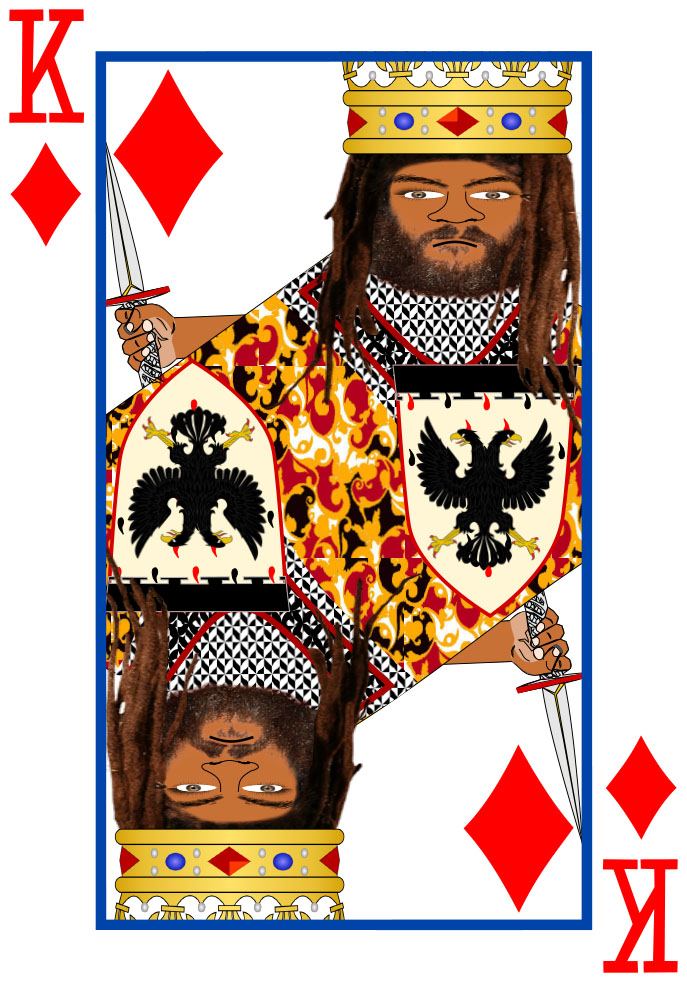
The Four Stuart Kings · King of Diamonds
Charles I
King of England, Scotland and Ireland
1600–1649
The King Who Lost His Crown
Charles I inherited the thrones of England, Scotland, and Ireland in 1625 following the death of his father, James VI and I. A firm believer in the divine right of kings, Charles maintained that royal authority came from God, a conviction that brought him into repeated conflict with Parliament.
His attempts to govern without Parliament, impose religious policies, and raise revenue without parliamentary consent contributed to growing unrest throughout his kingdoms.
These disputes eventually erupted into the English Civil Wars, pitting Royalist supporters of the monarchy against Parliamentarian forces.
Following military defeat, Charles was tried for treason and publicly executed outside the Banqueting House in London on January 30, 1649.
His execution marked an extraordinary turning point in European monarchy: a reigning king had been condemned and executed by a court established by his political opponents.
Historical Legacy
Charles I became a symbol of royal martyrdom among many Stuart loyalists. His death helped shape the political and religious convictions later embraced by supporters of the Stuart succession.